
Steve Simmonds and Ram Patel explore the subject.
A successful paid media campaign aimed at HCPs, should put the creative agency’s work, in the right place. Where you have the best chance of HCPs seeing it and engaging with it. In this article, we examine how it all starts with the brief, and what you can do to set off on the right foot…
When planning paid media for a pharma campaign aimed at HCPs, it all starts with the brief. If you can nail that, then you’re off to the races. The converse is also sadly true. So how can you set things up for success?
You need to start by asking some key questions. There are worse places to begin, than with Kipling’s famous “Six Honest Serving Men” poem:
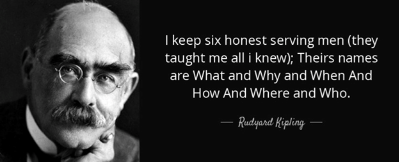
When developing the brief, you need to be endlessly curious, and this can sometimes potentially run the risk of asking what might seem to be annoying questions. But this is essential to tease out what the client is really trying to achieve, and why? So taking these six questions and putting them into a different order:
Who – clearly you need to establish who the target audience is. What specialties are in scope? Are there primary and then secondary audiences (eg nurses). If so, what % weighting should we apply to each group?
What – perhaps the most important question of all? What are you trying to achieve? For example, building awareness, disseminating data, driving clicks to site, or generating registrations for a webinar? To name a few.
Why – what’s behind this campaign? Why do you want/need to do it? This is often where the most digging is required. If the objective is to drive clicks to site, then asking why can be illuminating. Is there another way, that could be more efficient and cost-effective?
When – what’s the timing of the campaign? When do you want to start, and for how long do you want to run? If it’s a year-long campaign, then is the budget realistic for the objectives? Might it be better to run over a shorter period, but creating more impact?
Where – what’s the geography of the target audience? UK only, or specific cities/counties? For a European campaign, which countries should be included/excluded, and is there a priority weighting for eg EU4?
How – this is really for the media planner to answer. If you have all of the other questions down, then your planner will figure out the correct How. This will include tactics – eg banner ads, bespoke email, webinars and yes maybe print, plus channels – eg BMJ, Medscape, Pulse etc. An expert media planner will know which tactics & channels to select, in order to deliver the target level of HCP engagement.
Kipling’s six questions will get you a decent distance down the right road. You’ll know who you’re trying to reach, where they are, the timing, and crucially – what you’re trying to achieve and why. But to really nail the brief, and the how, you need to go further.
Enter Mr Data, and no, we’re not talking about Star Trek: The Next Generation. We’re looking at data, metrics, performance and reporting. The key question is – how will the client judge, whether or not this campaign has been successful? Because if the client cannot answer this, then the planner has no hope of delivering it.
If the objective is to raise awareness, then how can this be measured? Simply by the number of ad impressions & viewability? Or will there be a control group of HCPs who aren’t exposed to the campaign, to measure against the impact of those who were? This is not easy, but is an important factor. It’s much simpler to measure a more finite objective, such as driving clicks to site. But this may stimulate some useful discussion about whether the budget is sufficient, to drive a certain number of clicks? There are other factors in play here, for example the media schedule will look totally different for a campaign aimed around long-term strategy, as opposed to short-term tactics. Also, the planner will build a totally different campaign if the objective is awareness, as opposed to clicks. Ultimately, the stated (and measurable) objective of the campaign, is really the key to nailing the brief. Because what follows will inform the How, which is key to achieving HCP engagement, and then the reporting will also be designed to follow this.
Most planners/agencies will have a briefing form. The key is to keep this as short as possible; it shouldn’t be an onerous task for the client. But it does need to capture all of the important information. After completing the briefing form, you should always have a meeting to discuss it with the client, to tease out any aspects that might not be immediately obvious. Then the planner will be fully armed, to build a media schedule that meets the client’s specific brief.
If you can put the right message, in the right place, that’s golden. The media brief will do the latter, while the creative brief covers the former. A pleasing analogy here, is that music & lyrics, come together to make a memorable song. So your creative and media agencies should be meeting, then you’re putting the different elements together, to enable the very best chance of achieving an effective campaign with high HCP engagement.
So, nail the brief, and start off on the right foot…
“Time spent on a media brief at the outset, will always pay dividends. It’s tough, because everyone is keen to get on with it. But everything flows from the brief. So any time spent interrogating it and discussing it, will lead to a better outcome. To coin a phrase, you get a return on that investment”. – Steve Simmonds Director SJS Health Consulting Ltd
We’d welcome the opportunity to continue the conversation, join us at the Pharmony Summit on 9th June 2026 to explore how to truly nail the HCP media brief, for more information click here for the agenda.